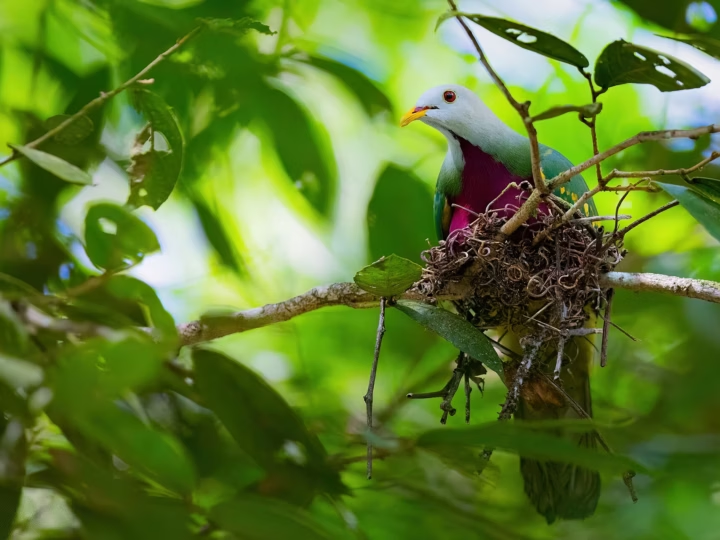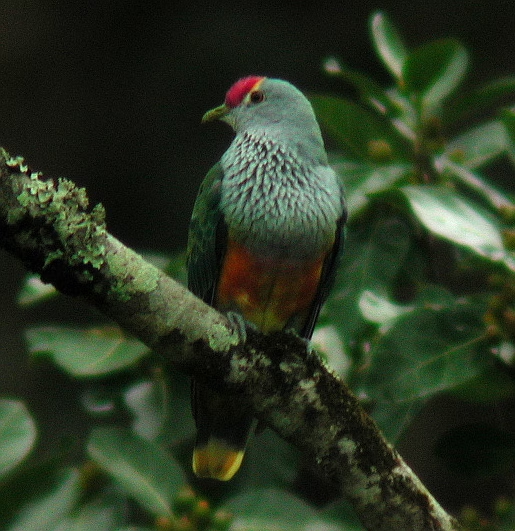
The Rose-crowned Fruit-Dove (Ptilinopus regina) is an Australian bird best identified by combining plumage, body shape, behaviour, voice and habitat. A small green fruit-dove with a rose-pink to crimson crown bordered by paler colour, greyish head and rich yellow-orange on the lower belly or undertail. Adults are typically about 22–24 cm long. Because colour can look different in shade, harsh sun or worn plumage, use several independent clues before settling on an identification.
How to identify a Rose-crowned Fruit-Dove
A small green fruit-dove with a rose-pink to crimson crown bordered by paler colour, greyish head and rich yellow-orange on the lower belly or undertail. Start with overall size and silhouette, then check the head pattern, bill, wing shape, tail and any strong blocks of colour. Usually feeds quietly in the canopy, where green plumage makes it easy to overlook. Birds often swallow fruit whole and move between fruiting trees. These movement patterns can be just as useful as plumage, especially when the bird is distant or partly hidden.
Take note of how the bird flies and where it spends its time. A species that normally feeds on the ground, stays inside reeds, works through rainforest canopy or remains almost constantly airborne creates a very different field impression from a similarly coloured bird in another ecological niche.
Where is the Rose-crowned Fruit-Dove found in Australia?
Northern and eastern Australia from the Kimberley and Top End through Cape York and down the east coast to New South Wales.
Typical habitat includes Rainforest, monsoon forest, vine thickets, mangroves and fruiting trees along forest edges. Range is one of the fastest ways to check an identification. Australian birds can wander, but a sighting that matches both the normal distribution and the expected habitat is much stronger than a colour match alone.
What does the Rose-crowned Fruit-Dove eat?
Fleshy fruits and berries, especially figs.
Feeding behaviour is a useful supporting clue. Watch whether the bird takes food from flowers, fruiting canopy, open ground, shallow water or the air. Natural foraging also helps explain why the species is associated with particular habitats and why local abundance can change with rainfall, flowering or seasonal food supply.
Behaviour and calls
Usually feeds quietly in the canopy, where green plumage makes it easy to overlook. Birds often swallow fruit whole and move between fruiting trees.
Soft, repeated coos or low booming notes that can be hard to locate in dense foliage. Voice is particularly valuable when vegetation or distance makes plumage hard to see. Listen for the rhythm, number of notes, pitch and whether the sound is given from a perch, from dense cover or in flight.
Nesting and breeding
Builds a light twig platform in a tree or vine, usually well concealed by foliage. Breeding timing can vary across Australia with latitude, rainfall and food availability. If you find an active nest, eggs or dependent young, observe from a respectful distance so adults can continue normal feeding and defence behaviour without repeated disturbance.
Similar birds
Possible confusion species include Superb Fruit Dove and Wompoo Fruit Dove. Do not compare colour alone. Bill shape, body proportions, tail length, face pattern, voice, habitat and geographic range are often more reliable. If two species seem possible, write down three or four visible features before checking a field guide so memory does not gradually shift toward the bird you expected to see.
Quick identification checklist
For a fast field check, remember four points: size: about 22–24 cm; appearance: A small green fruit-dove with a rose-pink to crimson crown bordered by paler colour, greyish head and rich yellow-orange on the lower belly or undertail.; habitat: Rainforest, monsoon forest, vine thickets, mangroves and fruiting trees along forest edges.; and behaviour: Usually feeds quietly in the canopy, where green plumage makes it easy to overlook. Birds often swallow fruit whole and move between fruiting trees.
When identifying this species, avoid relying on a single patch of colour. Light can change the apparent shade of feathers, and juveniles or worn adults may look different from a field-guide illustration. Compare body size, bill shape, tail length, flight style, habitat and geographic range together. A short observation of behaviour often provides a stronger identification than one quick photograph.
Sources and further reading
Species information should be cross-checked with current Australian references such as BirdLife Australia bird profiles and the Australian Museum bird collection. Taxonomy, distribution and conservation status can change, so use current official guidance for management or threatened-species decisions.