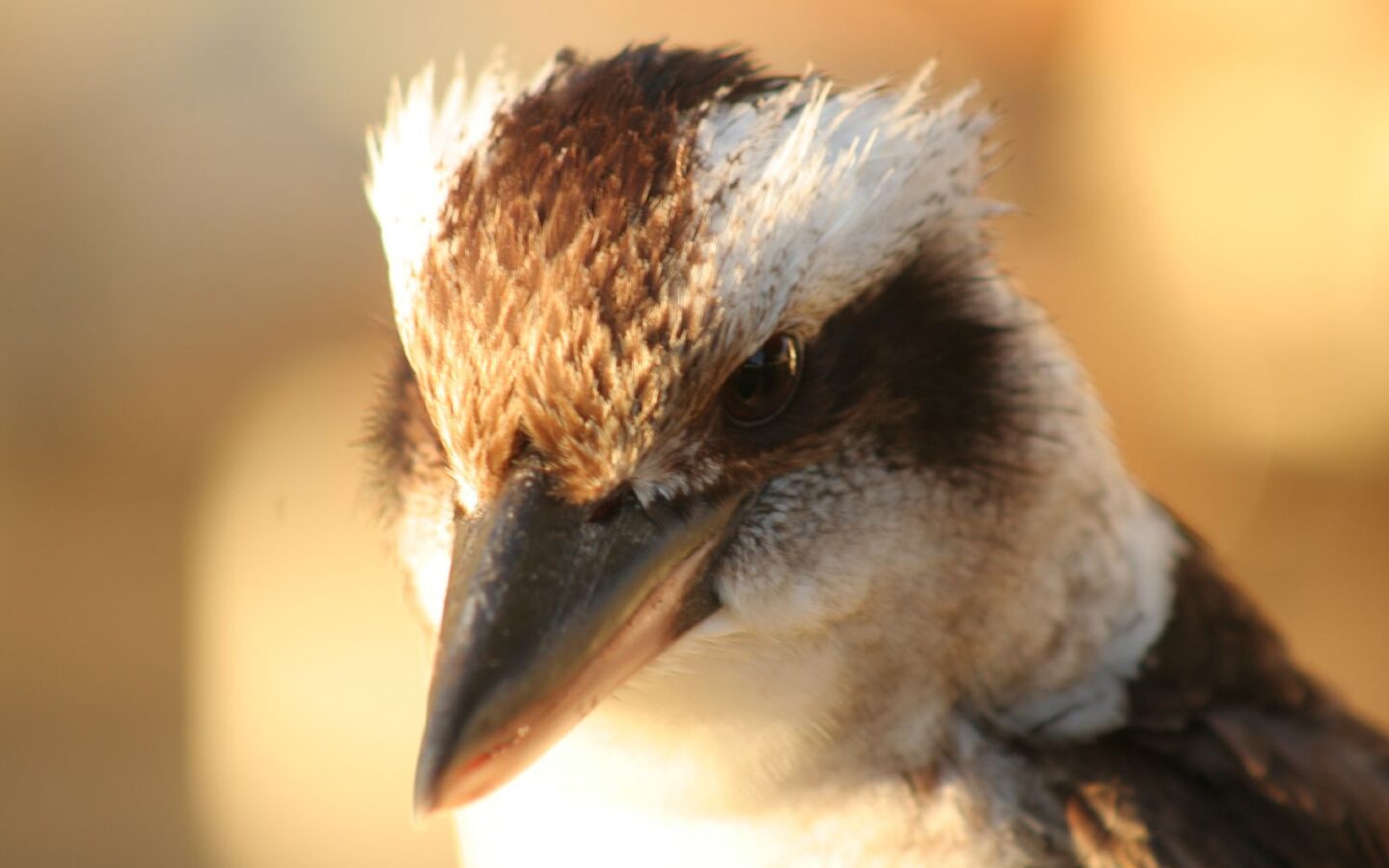
Bird behaviour can be one of the fastest ways to identify a species. Colour changes with light and distance, but the way a bird moves, feeds, calls and responds to other birds often gives away what it is.
Popular behaviour guides
- Why Do Magpies Swoop? — understand the breeding-season defence behaviour and how to move through a swooping area more safely.
- Why Do Kookaburras Laugh? — learn why the famous cackle is a territorial call rather than laughter in the human sense.
Behaviour clues to watch for
How a bird feeds
Feeding style is highly informative. Rainbow Lorikeets clamber among blossoms for nectar and pollen, Nankeen Kestrels may hover while searching for prey, herons stalk slowly through shallow water, cormorants dive and later perch with their wings spread, and Willie Wagtails often chase insects from exposed perches.
Where it spends its time
Some birds are strongly associated with the ground, canopy, open water, reeds or exposed branches. A bird’s preferred height and habitat can narrow an identification before you have seen every plumage detail.
Calls and songs
Australian birds are remarkably vocal. The Laughing Kookaburra’s chorus, the Australian Magpie’s flute-like carolling and the Eastern Koel’s repeated breeding-season call are useful field marks. If a bird is difficult to see, voice may be the best clue you have.
Flocking and social behaviour
Galahs, corellas and lorikeets often gather in conspicuous groups, while many raptors are seen alone or in pairs. Some birds cooperate to defend territories, others form feeding flocks, and some become more social outside the breeding season.
Nesting and territorial behaviour
Many behaviours that look aggressive are connected with breeding. Birds may call more often, chase rivals, defend a nest area or give alarm calls when a person or predator approaches. Give active nests and dependent young plenty of space.
Use behaviour with appearance
No single behaviour proves an identification. Combine what the bird was doing with size, bill shape, plumage, habitat, location and voice. Then compare your shortlist in the Australian bird directory or use the visual identification guides.