A long beak is one of the best clues for identifying an Australian bird. The shape matters as much as the length: curved, straight, spear-like and pouch-shaped bills usually point to very different feeding styles.
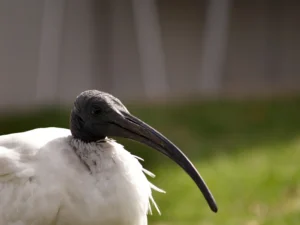


Australian White Ibis — Photo: Cyron Ray Macey, CC BY 2.0, source.
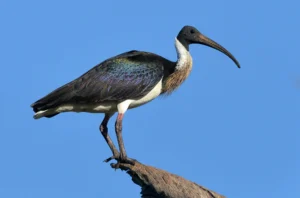
Straw-necked Ibis — Photo: Jean and Fred, CC BY 2.0, source.
White-faced Heron — Photo: PaulBalfe, CC BY 2.0, source.
Great Egret — Photo: Glen Fergus, CC BY-SA 2.5, source.
Likely long-billed birds
- Australian White Ibis — long down-curved black bill, white body and bare black head.
- Straw-necked Ibis — similarly curved bill, glossy dark wings and white body.
- White-faced Heron — straight spear-like bill, grey body and pale face.
- Great Egret — tall all-white heron with a long neck and straight bill.
- Australian Pelican — enormous pink bill with a large throat pouch.
- Australian Pied Oystercatcher — long straight red-orange bill and black-and-white coastal plumage.
- Rainbow Bee-eater — much smaller, with a slender slightly down-curved bill used to catch insects.
Bill shape is the key
Ibises probe soil and mud with curved bills. Herons and egrets use straight pointed bills to strike at prey. Pelicans have a huge pouch bill, while oystercatchers use a strong straight bill around shorelines. Combine bill shape with leg length and habitat for a much faster identification.
Also see the Australian water birds guide.