Australian water birds include ducks, swans, rails, herons, pelicans, cormorants and ibises. The easiest way to narrow them down is to look at body shape, bill shape, leg length and how the bird moves through the water.
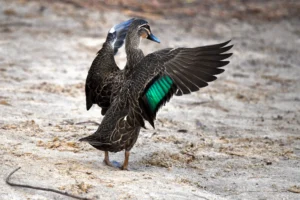
Pacific Black Duck — Photo: Jean and Fred Hort, CC BY 2.0, source.
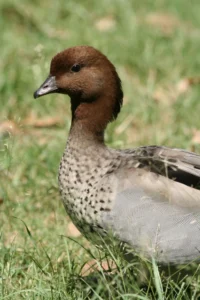
Australian Wood Duck — Photo: Glen Fergus, CC BY-SA 2.5, source.
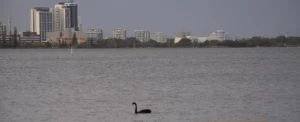
Black Swan — Photo: JarrahTree, CC BY 2.5 AU, source.
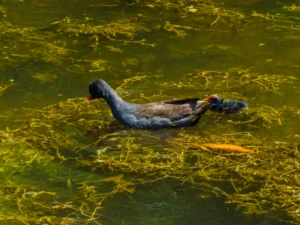
Dusky Moorhen — Photo: John Robert McPherson, CC BY-SA 4.0, source.
Common water birds to compare
- Pacific Black Duck — mottled brown duck with a bold dark eye stripe and pale face stripes.
- Australian Wood Duck — goose-like duck often grazing on lawns; males have a brown head and grey body.
- Black Swan — very large black swan with red bill and long curved neck.
- Dusky Moorhen — dark waterbird with red-and-yellow bill, common around reeds and park ponds.
- Australasian Swamphen — larger deep blue-purple rail with red bill, frontal shield and long red legs.
- Australian Pelican — huge black-and-white bird with an exceptionally long pink bill and throat pouch.
- White-faced Heron — slim grey heron with pale face, usually standing or stalking in shallow water.
- Great Egret — tall all-white heron with long neck and spear-like bill.
- Little Pied Cormorant — small black-and-white diving bird that often perches with its wings spread.
- Australian White Ibis — white body, bare black head and long curved black bill.
Use behaviour to help
Ducks usually float high and dabble or graze; cormorants dive completely underwater; herons stalk slowly through shallow water; moorhens and swamphens often stay close to reeds and banks; pelicans are unmistakably huge. Habitat also matters, from urban ponds and farm dams to estuaries, beaches and inland wetlands.
For bill-shape comparisons, see Australian birds with long beaks.