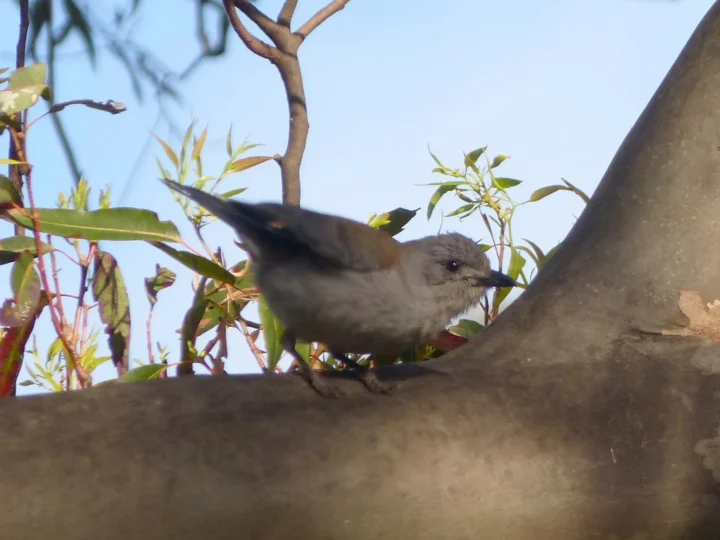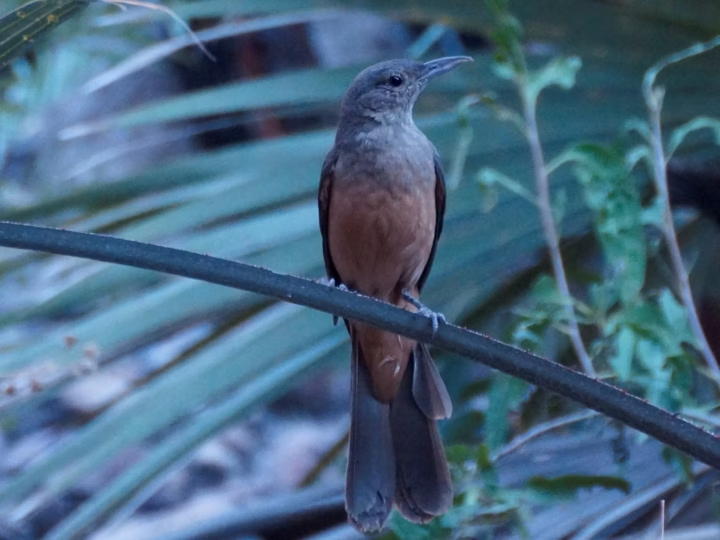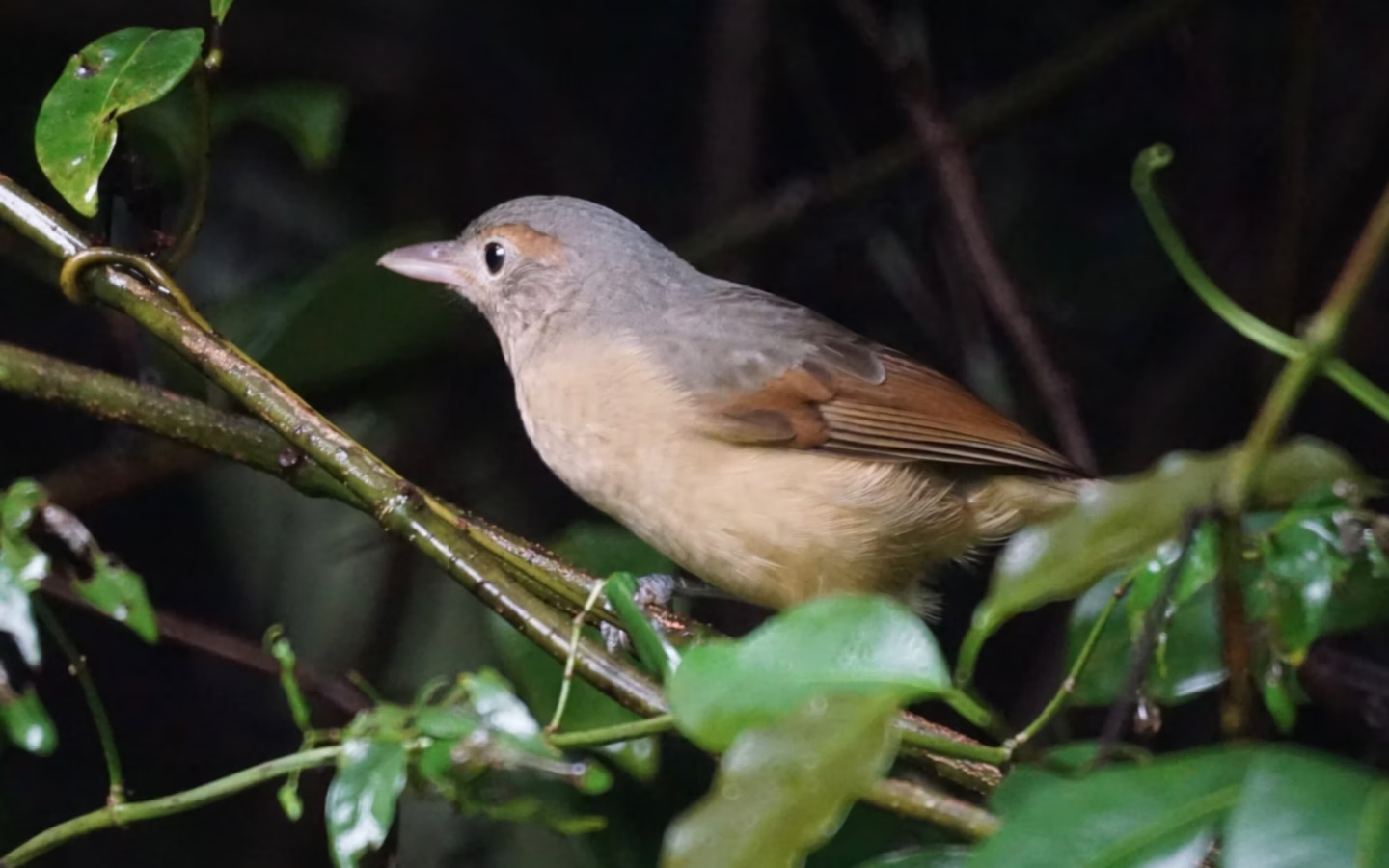
The Little Shrike-thrush (Colluricincla megarhyncha) is an Australian bird best identified by combining plumage, body shape, habitat and range. Compact brown-grey shrike-thrush with pale underparts and a strong straight bill; overall plumage is subtle, so shape, voice and habitat are useful clues. Adults are typically about 16–19 cm long. Size is useful, but it should never be used by itself: distance, posture and perspective can make a bird look larger or smaller than it really is.
How to identify the Little Shrike-thrush
Compact brown-grey shrike-thrush with pale underparts and a strong straight bill; overall plumage is subtle, so shape, voice and habitat are useful clues. Start with the overall silhouette and then check the head, bill, wings, underparts and tail. Look for several features that agree with one another rather than relying on a single colour. Sunlight can make bright plumage look washed out, while shade can hide subtle markings. If possible, note the bird’s behaviour and take photographs from more than one angle.
Where does the Little Shrike-thrush live in Australia?
Northern and eastern tropical Australia, especially in humid forested areas.
Typical habitat includes rainforest, vine forest, monsoon forest and dense tropical woodland. Location is an important part of identification because many Australian birds have strongly regional distributions. Within the broad range, local abundance can change with season, rainfall, flowering, fire history and food availability. A species may therefore be common in one district but scarce only a short distance away.
What does the Little Shrike-thrush eat?
Insects and other small animals, with some fruit. Food availability influences where birds occur and how visible they are. When trying to identify a bird, watch exactly how it feeds: note whether it picks food from the ground, probes flowers, searches bark, chases insects in the air or works methodically through foliage. Feeding behaviour often provides an extra clue when plumage is difficult to see.
Behaviour and calls
These birds spend much of their time searching foliage, bark, trunks and low branches for insects and other prey. Whistlers are especially noted for clear musical voices, while shrike-thrushes also use rich, carrying calls. A bird may remain partly hidden inside vegetation, so listening carefully and noting bill shape, body size and habitat can be more reliable than waiting for a perfect view.
Nesting and breeding
Pairs generally build an open cup nest in a tree, shrub, fork or sheltered vegetation. Plant fibres, bark and other fine material are used to form the nest, and the adults remain attentive to the nesting area. Breeding seasons vary geographically, especially between tropical and temperate populations, and can respond to rainfall and local food supply.
If you find an active nest, hollow or dependent young, keep enough distance for the adults to continue normal behaviour. Repeated approaches can interrupt feeding or draw attention to the nest. Breeding timing is not identical across Australia, so local conditions are more useful than assuming one fixed month applies everywhere.
Similar birds
Useful comparison species include Grey Shrike-thrush and Sandstone Shrike-thrush. When separating similar birds, compare several points together: size, bill shape, head pattern, wing and tail markings, voice, habitat and geographic range. For this species, the best starting clue is: compact brown-grey shrike-thrush with pale underparts and a strong straight bill; overall plumage is subtle, so shape, voice and habitat are useful clues. If one major feature does not fit, keep the identification open until you can check another view or call.
Best way to confirm your identification
Use a simple three-step check. First, confirm that the bird is roughly 16–19 cm long. Second, match the visible features with this description: compact brown-grey shrike-thrush with pale underparts and a strong straight bill; overall plumage is subtle, so shape, voice and habitat are useful clues. Third, ask whether the location and habitat make sense: the species occurs in northern and eastern tropical Australia, especially in humid forested areas. and commonly uses rainforest, vine forest, monsoon forest and dense tropical woodland. Matching appearance, place and behaviour is much more reliable than matching colour alone.
Quick identification tip
If you remember only one thing, look for compact brown-grey shrike-thrush with pale underparts and a strong straight bill; overall plumage is subtle, so shape, voice and habitat are useful clues. Then confirm the sighting with size, habitat and range. That combination gives you a stronger identification than any single photograph or colour patch viewed in isolation.
Sources and further reading
For additional Australian bird information and current species guidance, see BirdLife Australia bird profiles and the Australian Museum bird collection.