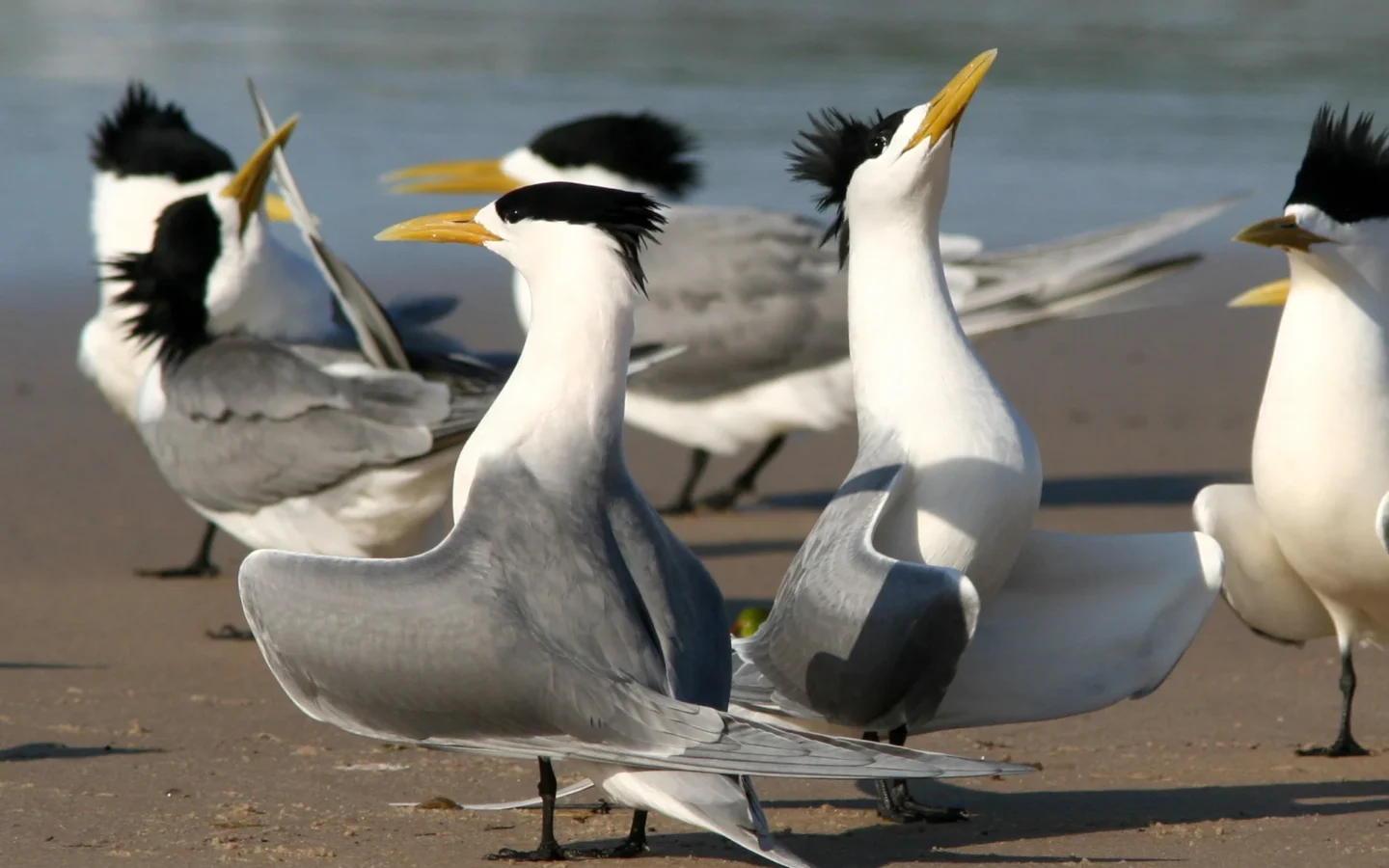
The Crested Tern (Thalasseus bergii) is an Australian bird or regular visitor that can be identified most reliably by combining shape, plumage, habitat and behaviour. A large sleek tern with pale grey upperparts, white underparts, a long yellow bill and a shaggy black crest; non-breeding birds develop a whiter forehead. Adults are typically about 43–48 cm long, although posture, sex, age and plumage can affect how large an individual appears in the field.
How to identify a Crested Tern
A large sleek tern with pale grey upperparts, white underparts, a long yellow bill and a shaggy black crest; non-breeding birds develop a whiter forehead. Start with overall silhouette before focusing on colour. Check the bill, legs, tail, wing shape and any bold head or body pattern. Distance, shade, glare and strong Australian sunlight can change the apparent colour of feathers, so several matching features are more useful than a single mark.
Crested Terns often gather in flocks on beaches and sandbars, then fly out over nearshore water to hover and plunge after schooling fish. Behaviour can be one of the quickest ways to confirm an identification because closely related birds often feed, fly or perch differently even when their plumage looks similar.
Where is the Crested Tern found in Australia?
Common around most of the Australian coastline, including offshore islands, bays, harbours and ocean beaches.
Typical habitat includes coastal waters, estuaries, beaches, rocky headlands, islands and nearshore ocean. Distribution can shift with rainfall, drought, breeding conditions, migration, tides and local food supply, so an apparently unusual sighting should be checked against season as well as location.
What does the Crested Tern eat?
Small fish and squid caught mainly by plunge-diving into the sea. Watching exactly how a bird feeds can provide another useful clue. Note whether it runs and pecks, probes mud, sweeps its bill, plunge-dives, surface-dips or catches food in flight. Feeding technique often separates species that share the same habitat.
Wild birds do not need processed human food. Protecting natural habitat, clean water and native food sources is usually a better way to support them than regular feeding.
Behaviour and calls
Crested Terns often gather in flocks on beaches and sandbars, then fly out over nearshore water to hover and plunge after schooling fish.
Calls are loud, grating and repeated, creating a noisy chorus around roosts and breeding colonies. Voice can be especially useful when distance, a crowded flock or low light makes visual identification difficult. Try to notice the rhythm and tone as well as a written approximation of the sound.
Nesting and breeding
They breed colonially on sandy or rocky islands and coastal sites, laying eggs in simple ground scrapes. Breeding timing varies according to latitude, climate and species. Many migratory shorebirds seen in Australia breed in the Northern Hemisphere, while resident terns and seabirds may nest on Australian beaches or offshore islands. If you find a nest or dependent young, observe from a respectful distance.
Similar birds
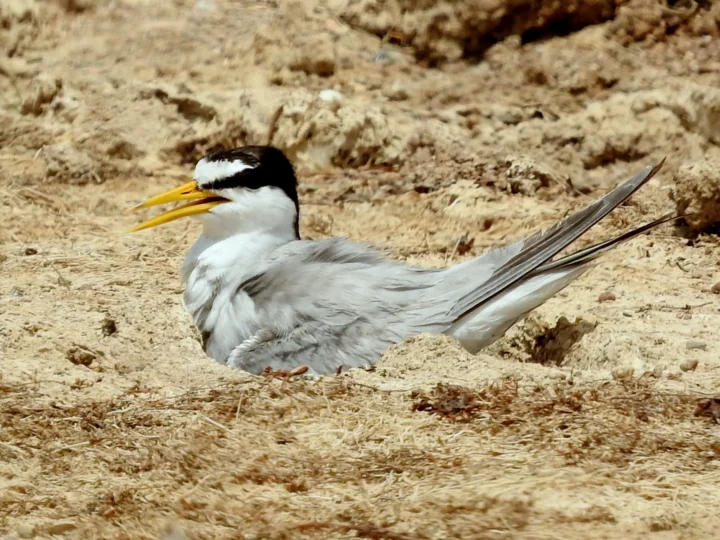
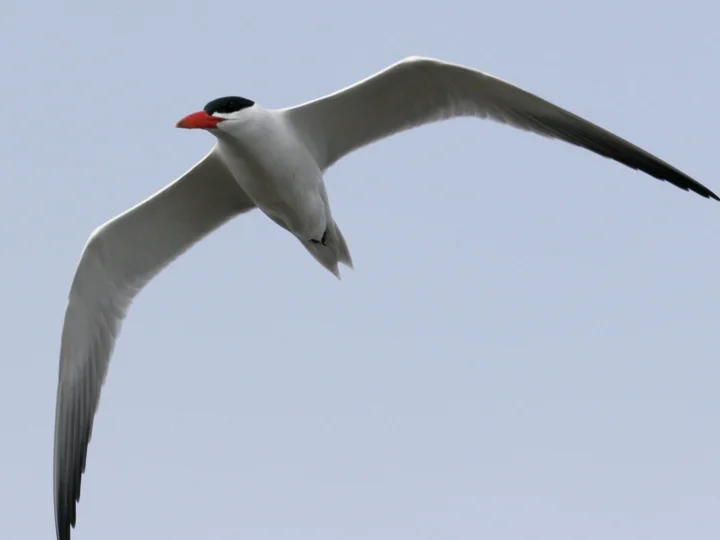
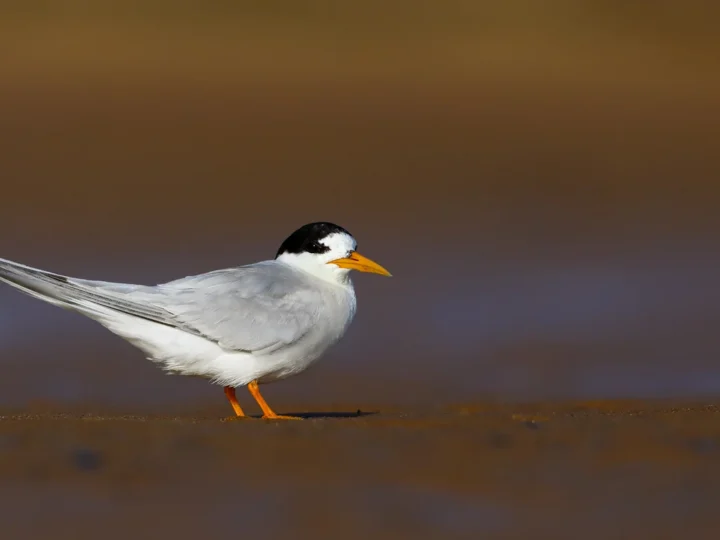
Caspian Terns are larger with a massive red bill, while Little and Fairy Terns are much smaller and lighter-built.
When two species remain difficult to separate, compare photographs against multiple field marks rather than choosing on colour alone. Geographic range, voice, habitat and feeding style may be more decisive than one feather pattern.
Quick identification tip
Remember three things: its approximate size is 43–48 cm; its key visual clue is a large sleek tern with pale grey upperparts, white underparts, a long yellow bill and a shaggy black crest; non-breeding birds develop a whiter forehead.; and a typical setting is coastal waters, estuaries, beaches, rocky headlands, islands and nearshore ocean. Matching all three gives a much stronger identification than any one clue by itself.
When and where to look
The best chance of seeing the Crested Tern depends on the species’ movements and habitat. In Australia, start with coastal waters, estuaries, beaches, rocky headlands, islands and nearshore ocean. Early morning and late afternoon can provide calmer conditions and better light, while tidal shorebirds are easiest to study when falling water exposes feeding areas. For pelagic species, location, season and sea conditions matter more than time of day.
Sources and further reading
For additional Australian bird information and conservation guidance, see BirdLife Australia bird profiles and the Australian Museum bird collection. Image licensing and creator information for this page is recorded from the linked Wikimedia Commons file page.