_South_Bruny_3.jpg)
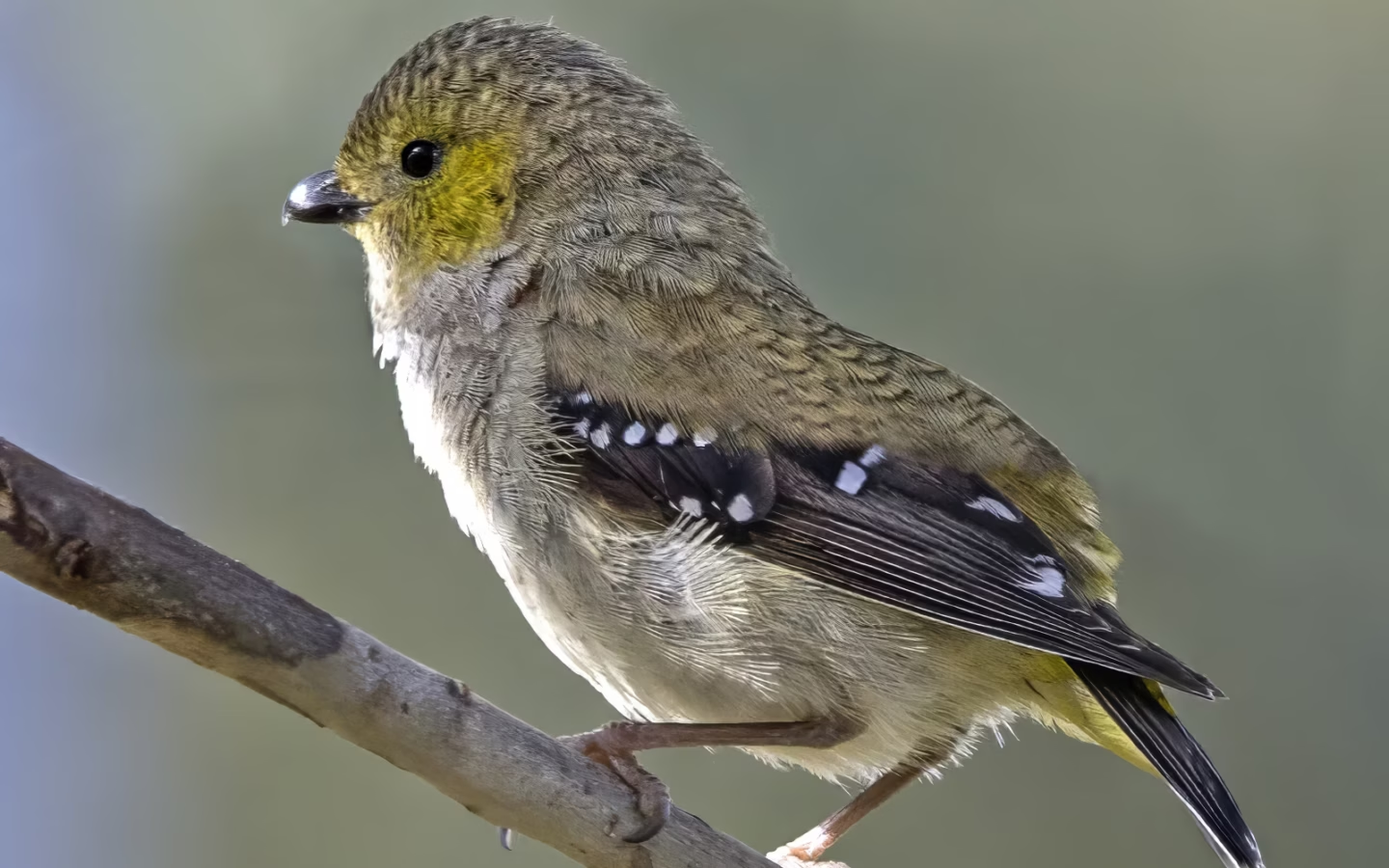
The Forty-spotted Pardalote (Pardalotus quadragintus) is an Australian bird best identified by combining structure, plumage, behaviour, voice and location. Adults are about 10–12 cm long. Key field marks include olive-grey body with many small white wing spots and a pale face. A single colour can be misleading in strong sunlight or deep shade, so try to confirm several features before settling on an identification.
How to identify the Forty-spotted Pardalote
Begin with overall size and shape, then check the bill, head, breast, wings and tail. For the Forty-spotted Pardalote, concentrate especially on olive-grey body with many small white wing spots and a pale face. Watch how the bird holds itself and how it moves through its surroundings. Posture, feeding height and movement can remain useful even when plumage detail is hard to see.
Voice can be equally important. Listen for rhythm, pitch, repetition and pauses rather than relying only on written imitations of calls. If possible, observe the same individual for several minutes and note whether it feeds on the ground, among shrubs, on tree trunks, in the canopy or in open air.
Where is the Forty-spotted Pardalote found in Australia?
Tasmania, especially the south-east and offshore islands. Range is an important reality check when identifying Australian birds. A bird may look superficially correct yet be unlikely in the place where it was seen. Seasonal movement, drought, rainfall, fire and flowering events can alter local occurrence, so unusual observations near a range edge are worth checking against recent regional records.
Habitat
White Gum woodland and associated forest. Habitat is part of the identification, not just background scenery. Record vegetation type, moisture, nearby water, elevation and the height at which the bird spends most of its time. Closely related birds can often be separated more reliably by habitat and foraging level than by a small difference in colour.
What does the Forty-spotted Pardalote eat?
The diet includes insects and lerp. Feeding behaviour provides another clue. Watch whether the bird gleans foliage, probes bark or flowers, searches leaf litter, picks seeds from the ground, pounces from a perch or catches insects in flight. Diet and feeding method can change with season and local food availability.
Behaviour and calls
Try to record whether the bird is solitary, paired or in a flock, how high it feeds, how it uses its tail and wings, and whether it repeatedly returns to the same perch or feeding patch. Behaviour should support an identification rather than replace plumage and range evidence.
Early morning is often the easiest time to match voice with appearance because many birds are active and vocal. For shy species, remaining still and listening can be more productive than moving closer. Avoid repeated playback, especially when birds are territorial or breeding.
Nesting and breeding
Breeding timing varies across Australia with latitude, rainfall and food. Nest style and placement can be useful supporting clues, but active nests should never be approached repeatedly simply for identification or photography. Adults carrying food, giving alarm calls or returning to one patch of vegetation are signs to increase your distance.
Where a species nests on or near the ground, staying on established tracks is particularly important. Hollow-nesting birds should likewise be given room to enter and leave freely. Patient observation usually gives better information while causing less disturbance.
Similar birds
When comparing the Forty-spotted Pardalote with similar birds, combine its 10–12 cm size, olive-grey body with many small white wing spots and a pale face, geographic range and habitat. Compare bill depth, face pattern, eye colour, tail shape, wing markings and feeding level. For difficult pairs, look for a feature that should be present on one candidate but absent on the other.
If uncertain, write down the date, location, habitat, approximate size, several visible markings, behaviour and call before checking photographs. A note made immediately after the sighting is often more dependable than memory later.
Quick identification tip
Start with olive-grey body with many small white wing spots and a pale face. Then confirm that size, range, habitat and behaviour all fit. When these independent clues agree, the identification is much stronger.
Sources and further reading
For current Australian taxonomy, distribution and conservation information, cross-check with BirdLife Australia bird profiles and the Australian Museum bird collection. Image attribution and licensing are preserved separately in the BirdGuide image register.