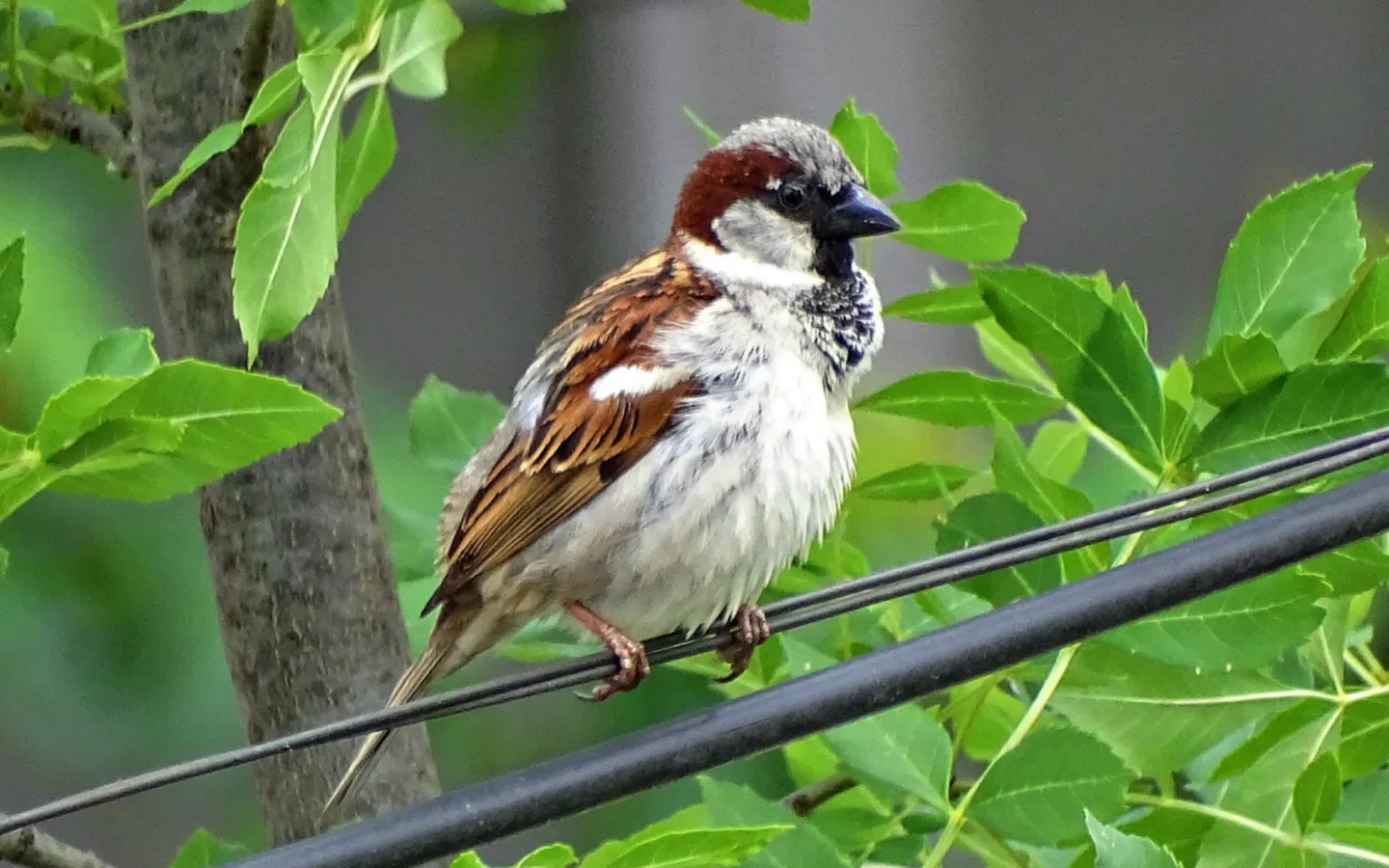
If you are trying to identify a House Sparrow, start with the whole bird rather than a single colour. The species, Passer domesticus, is usually around 14–16 cm long. Males have a grey crown, chestnut nape and black bib, while females and immature birds are plainer brown with a pale eyebrow and streaked back. That combination is more dependable than colour alone, which can shift with shade, distance, moult and camera exposure.
How to identify a House Sparrow
Males have a grey crown, chestnut nape and black bib, while females and immature birds are plainer brown with a pale eyebrow and streaked back. Start with silhouette and proportions, then check the head, bill, wings, tail and underparts. If the bird is distant, note how it holds its body and whether the tail is long, short, fanned, cocked or constantly moving. A quick phone photograph can help later, but a written note of colours, size and behaviour is often just as valuable.
This species is introduced in Australia, so a BirdGuide profile is included because people commonly encounter and need to identify it here. Its presence should not be confused with being native, and local wildlife advice should be followed if management questions arise.
Where is the House Sparrow found in Australia?
An introduced bird established in many settled parts of southern and eastern Australia, especially towns and agricultural districts.
Typical habitat includes cities, suburbs, farms, transport hubs and other places closely associated with people. The species may be common in one district and scarce in another because vegetation, rainfall, food supply, breeding conditions and seasonal movement all affect where birds are seen. When checking a sighting, range should support the identification rather than replace the visual evidence.
What does the House Sparrow eat?
Seeds and grains, insects especially when feeding young, and a range of human food scraps. Feeding style is a practical identification clue: watch whether the bird searches the ground, probes bark, gleans leaves, takes fruit, dives into water or catches insects in flight. Natural feeding behaviour also tells you which habitats are most likely to produce repeat sightings.
Wild birds generally do best when natural food and habitat are available. BirdGuide describes normal diet and foraging ecology; it does not assume that human feeding is necessary or suitable for every species.
Behaviour and calls
Usually forms small flocks around buildings, outdoor eating areas and grain sources. It hops and feeds mainly on or near the ground.
Familiar repeated chirps and chatters, particularly around communal resting and feeding sites. Voice is especially useful when a bird is hidden by foliage, active at dawn or dusk, or moving too quickly for a long view. Try to note rhythm, pitch and whether the phrase rises, falls or repeats rather than relying only on a written imitation of the sound.
Nesting and breeding
Builds bulky nests in building cavities, roof spaces, signs, nest boxes and other sheltered holes. Breeding timing varies around Australia with latitude, rainfall and local food conditions. If you find an active nest, roost or dependent young, observe from a respectful distance and avoid repeatedly approaching for photographs.
Birds that can look similar
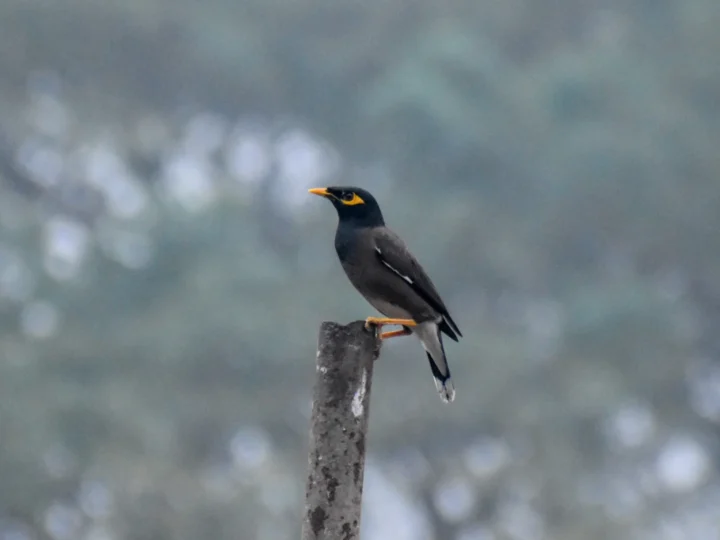
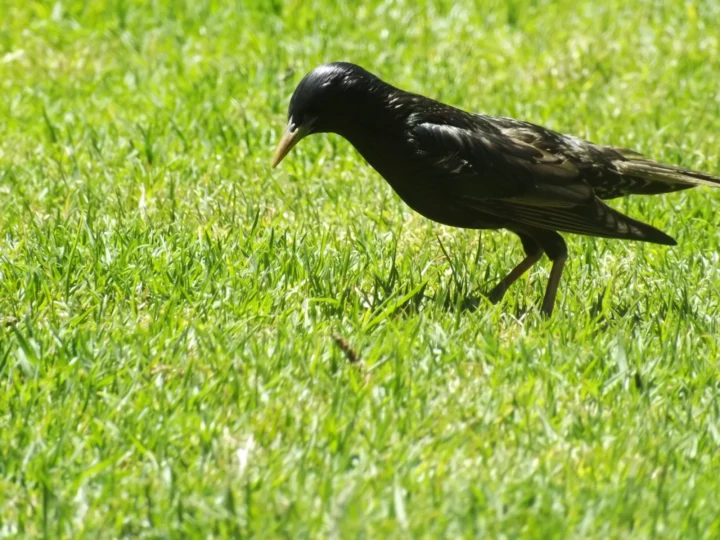
Useful comparison species include Common Myna and Common Starling. Compare bill shape, eye and face pattern, tail shape, body proportions, voice and geographic range. For difficult groups, a side-on photograph plus a second view of the wings or tail can resolve features that are easy to miss in the field.
Quick identification checklist
- Size: about 14–16 cm
- Key appearance: Males have a grey crown, chestnut nape and black bib, while females and immature birds are plainer brown with a pale eyebrow and streaked back.
- Where to look: Cities, suburbs, farms, transport hubs and other places closely associated with people.
- Food: Seeds and grains, insects especially when feeding young, and a range of human food scraps.
- Behaviour: Usually forms small flocks around buildings, outdoor eating areas and grain sources. It hops and feeds mainly on or near the ground.
If those clues agree, the identification is much stronger than a colour-only match. If one major feature conflicts, keep the sighting open and compare the related species before deciding.
Sources and further reading
Species information can be cross-checked with BirdLife Australia bird profiles and the Australian Museum bird collection. Taxonomy and common names can change over time, so BirdGuide uses current Australian usage where practical.