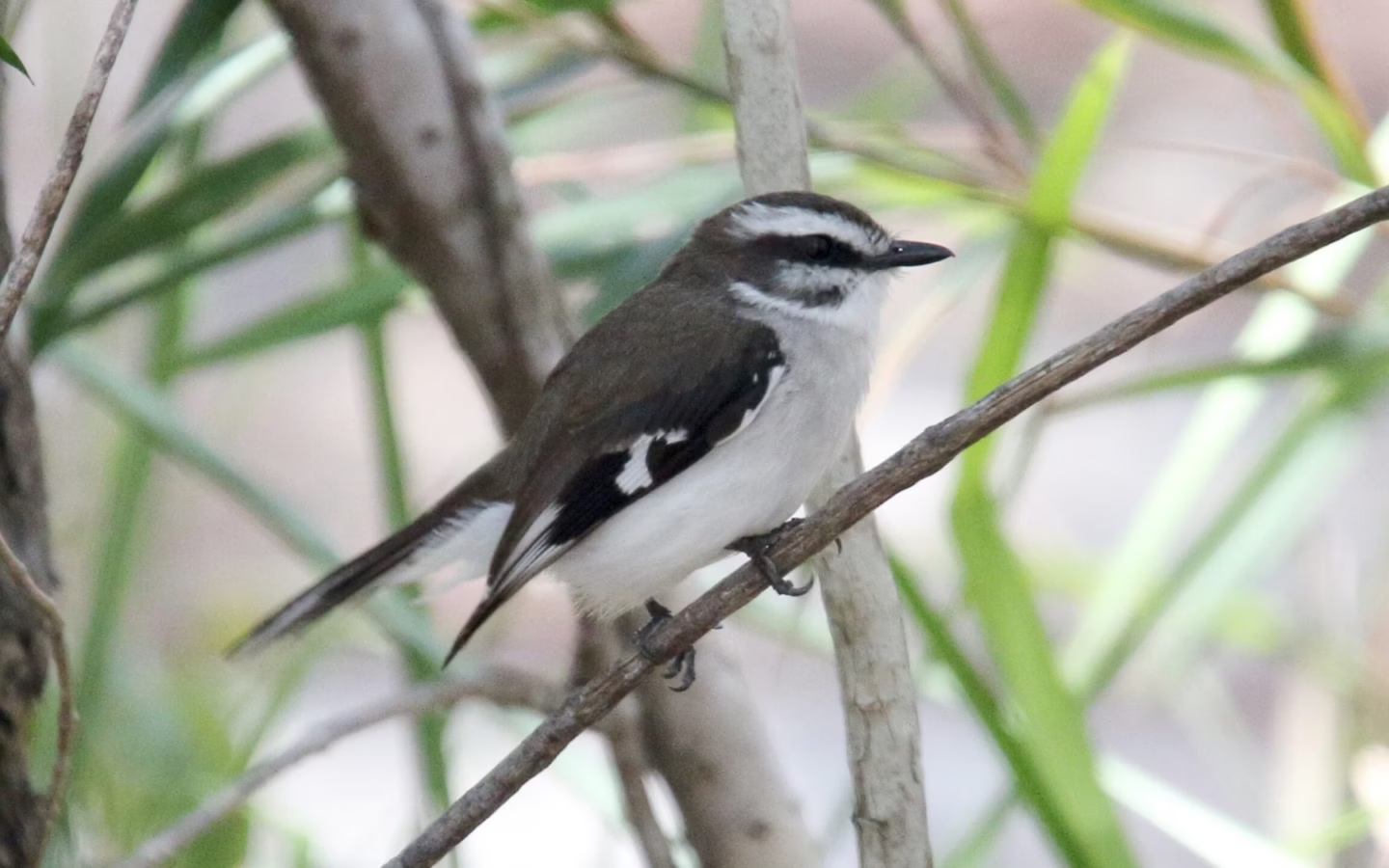
The White-browed Robin (Poecilodryas superciliosa) is an Australian bird best identified by combining structure, plumage, behaviour, voice and location. Adults are about 15–17 cm long. The most useful field marks are a strong white eyebrow, grey-brown upperparts, pale underparts and upright robin-like stance. A single colour can be misleading in strong sun or deep shade, so try to confirm several features before settling on an identification.
How to identify the White-browed Robin
Start with the bird’s overall size and shape, then check the bill, head pattern, breast, wings and tail. For the White-browed Robin, concentrate on a strong white eyebrow, grey-brown upperparts, pale underparts and upright robin-like stance. Watch how the bird holds itself and where it spends its time. It commonly watches from low or middle perches before dropping or sallying after insects, often close to dense cover.
Australian robins commonly use a sit-and-wait strategy: they watch from a perch, drop to the ground or foliage for prey, then return to another perch. Perch height and forest type are useful clues. If the view is brief, write down what you actually saw before checking a field guide. Details such as the colour of the iris, the width of an eyebrow, the shape of the bill or the way the tail is held can disappear surprisingly quickly from memory.
Where is the White-browed Robin found in Australia?
Northern and north-eastern Australia. Range is a powerful reality check for Australian bird identification. A bird may resemble a species in a photograph yet be unlikely in the place where it was seen. Check recent local records when a sighting is close to the edge of the expected range, and remember that drought, rainfall, fires, flowering events and seasonal movement can alter local occurrence.
Habitat
Tropical woodland, vine thickets and waterside vegetation. Record the habitat as carefully as the plumage. Note whether the bird is in rainforest, mallee, mangroves, open woodland, heath, arid shrubland, rocky country or wetland vegetation, and whether it is feeding on the ground, in the understorey or high in the canopy. Those ecological clues frequently separate species that look similar in a photograph.
What does the White-browed Robin eat?
The diet includes insects. Feeding behaviour is often visible even when plumage detail is not. Watch whether the bird probes flowers, gleans leaves, searches bark, scratches litter, picks seeds from the ground, pounces from a perch or catches insects in flight. The same species may change its feeding method when different foods become abundant.
Behaviour and calls
It commonly watches from low or middle perches before dropping or sallying after insects, often close to dense cover. Listen to the rhythm and structure of calls rather than trying to memorise a written imitation. Repeated notes, pauses, pitch changes and whether a call is given from cover or an exposed perch can all help. Early morning is often the easiest time to compare voice with appearance because many birds are both active and vocal.
Behaviour should be used with caution rather than as a single proof of identity. Weather, breeding condition, food supply and the presence of other birds can all change how an individual behaves. A useful field note records several things together: location, habitat, approximate size, key markings, feeding method and call.
Nesting and breeding
Robins generally make small cup nests, often well concealed. Watch from a distance if an adult repeatedly returns to the same patch of vegetation with food or nesting material. Breeding timing differs across Australia and may shift with latitude, rainfall and food. If you find an active nest, eggs or dependent young, observe quietly from a respectful distance. Avoid moving vegetation, standing on a direct approach line to the nest or repeatedly using playback to obtain a closer photograph.
Similar birds
The safest way to separate the White-browed Robin from similar Australian birds is to combine its 15–17 cm size, the field marks described above, its usual range and its preferred habitat. Compare bill depth, face pattern, tail length, underpart markings and feeding level. For closely related species, voice and geography can be more reliable than small colour differences.
If two candidates remain, look for a feature that should be present on one species but absent on the other rather than simply collecting more similarities. Good photographs from several angles can help later, but even a short written note made immediately after the sighting can be more dependable than memory.
Quick identification tip
For the White-browed Robin, begin with a strong white eyebrow, grey-brown upperparts, pale underparts and upright robin-like stance. Then confirm that the bird’s behaviour, habitat and Australian range fit the observation. When all of those clues agree, the identification is much stronger.
Sources and further reading
For current Australian taxonomy, distribution and conservation information, cross-check the species with BirdLife Australia bird profiles and the Australian Museum bird collection. BirdGuide records image licensing separately so the photograph attribution can be retained when the profile is published.
_(31304306071).jpg)