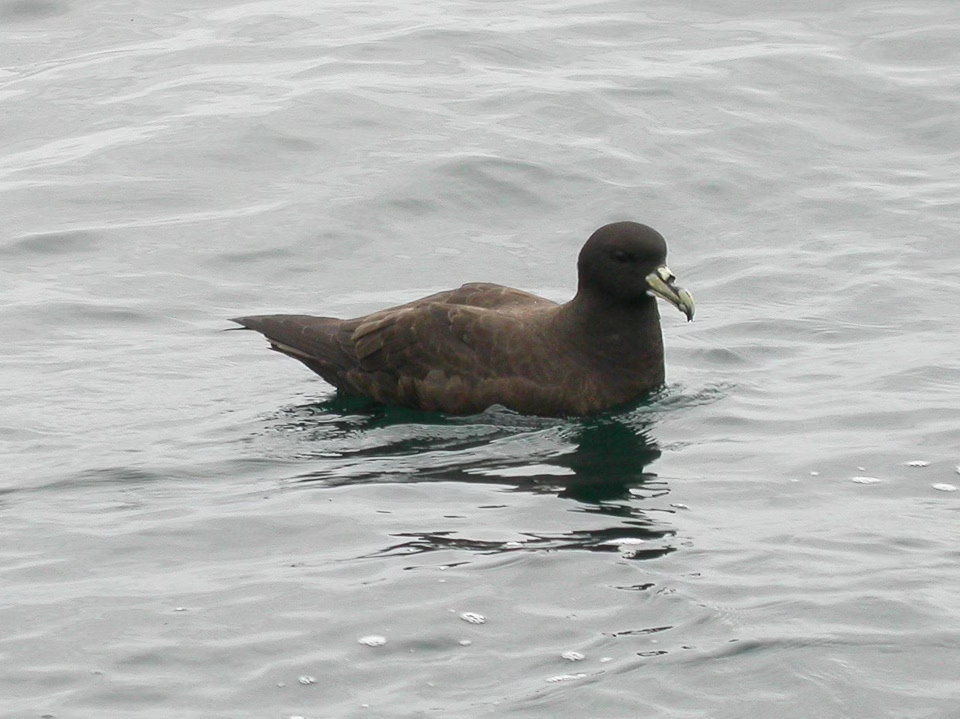

The White-chinned Petrel (Procellaria aequinoctialis) is an Australian bird best identified by combining structure, plumage, behaviour, voice and location. Adults are about 51–58 cm long. Key field marks include large dark petrel with pale bill and small white chin patch. A single colour can be misleading in strong sunlight, haze or deep shade, so a confident identification should use several independent features.
How to identify the White-chinned Petrel
Begin with overall size and shape, then check the bill, head, breast, wings and tail. For the White-chinned Petrel, concentrate particularly on large dark petrel with pale bill and small white chin patch. Watch how the bird holds itself and how it moves. Flight style, feeding height and posture can remain useful even when plumage detail is difficult to see.
Voice can also help. Listen for rhythm, pitch, repetition and pauses rather than relying only on written imitations of calls. For seabirds and fast-flying species, photographs showing the upperwing, underwing and tail can be especially useful when confirming an identification later.
Where is the White-chinned Petrel found in Australia?
Regular visitor to southern Australian offshore waters. Range is an important reality check when identifying Australian birds. A bird may resemble the right species but be unlikely in the place where it was seen. Seasonal movement, storms, ocean conditions, rainfall and food availability can shift birds beyond their usual distribution, so unusual records should be checked carefully.
Habitat
Open Southern Ocean. Habitat should be recorded as part of the identification rather than treated as background scenery. Note water depth, vegetation, distance offshore, coastline type or landscape structure, and whether the bird is resting, feeding or simply passing through. Closely related species often separate more clearly by habitat and behaviour than by one small plumage difference.
What does the White-chinned Petrel eat?
The diet includes fish, squid, crustaceans and carrion. Feeding method is another useful clue. Watch whether the bird hunts from a perch, chases prey in flight, probes mud, picks from the water surface, plunge-dives, scavenges or searches the ground. Food and technique can change with season and local conditions.
Behaviour and calls
Try to record whether the bird is solitary, paired or in a flock, how it flies, how high it feeds and whether it repeatedly returns to the same area. Raptors can often be separated by wing shape and soaring style, while shorebirds are helped by leg length, probing action and flock behaviour. Seabirds are frequently identified by a combination of wingbeat pattern, glide style and body proportions.
Early morning and late afternoon can provide softer light for plumage details, while calm conditions make calls easier to hear. For pelagic species, keep notes on wind, sea state and distance from shore because those details can help evaluate an unusual observation later.
Nesting and breeding
Breeding timing and nesting location vary greatly across Australia and among migratory species. Some birds breed locally, while others visit Australia only outside their breeding season. Active nests should never be approached repeatedly for identification or photography. Adults carrying food, giving alarm calls or returning to one location are signs to increase your distance.
Ground-nesting shorebirds, colonial seabirds and large raptors can be particularly sensitive to disturbance. Stay on established routes where possible and follow local access restrictions around breeding colonies, islands and protected wetlands.
Similar birds
When comparing the White-chinned Petrel with similar birds, combine its 51–58 cm size, large dark petrel with pale bill and small white chin patch, geographic range and habitat. Compare bill length and shape, face pattern, leg colour, tail shape, upperwing and underwing markings and flight style. For difficult species, look for a feature that should be present on one candidate but absent on the other.
If uncertain, write down the date, location, habitat, approximate size, several markings and behaviour before checking photographs. A field note made immediately after the sighting is often more dependable than memory later, particularly with rare migrants and seabirds.
Quick identification tip
Start with large dark petrel with pale bill and small white chin patch. Then confirm that size, range, habitat and behaviour all fit. When those separate clues agree, the identification is much stronger.
Sources and further reading
For current Australian taxonomy, distribution and conservation information, cross-check with BirdLife Australia bird profiles and the Australian Museum bird collection. Image attribution and licensing are preserved separately in the BirdGuide image register.