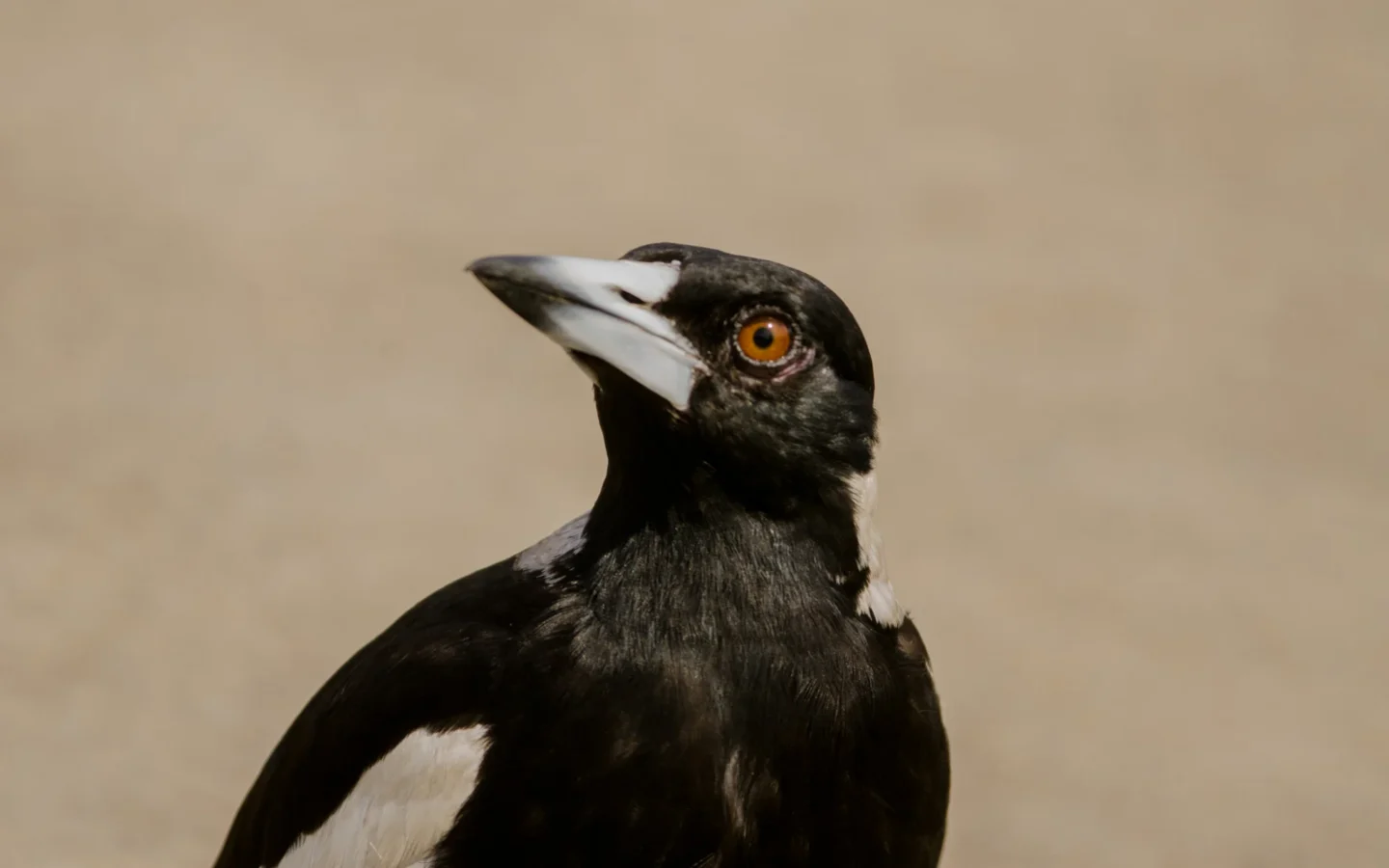
Australian Magpies swoop mainly to defend their young during breeding season. The behaviour is usually a temporary response to something the bird perceives as a threat near its nest or recently fledged chicks.
Why do magpies swoop people?
Swooping is generally defensive rather than random aggression. BirdLife Australia explains that it is most common when young are in the nest or have only recently fledged. Cyclists, joggers and dog-walkers can be more likely to trigger a response because rapid movement may appear more threatening.
Importantly, most magpies do not swoop people. Even among birds that do, many swoops are warning passes rather than physical attacks.
When is magpie swooping season?
Timing varies across Australia, but breeding activity commonly increases from late winter through spring. BirdLife Australia notes that the typical breeding season is around August to November, with northern areas sometimes recording swooping earlier than southern regions.
What should you do if a magpie is swooping?
- Give the area space. If practical, use another route while the bird is actively defending young.
- Move calmly out of the area. Do not stop to harass, chase or strike at the bird.
- Get off a bicycle. Walking the bike can reduce the speed and perceived threat.
- Protect your eyes and head. Sunglasses, a hat or a helmet can add protection.
- Keep dogs controlled. A dog may be seen as a predator close to a nest.
How long does swooping last?
For an individual territory, the problem is usually temporary and tied to the period when chicks are vulnerable. Once the young are older and the nest-defence phase passes, the bird normally stops swooping.
Can you identify the bird?
Read the full Australian Magpie profile for appearance, calls, habitat and similar black-and-white birds.
Further reading
See BirdLife Australia’s magpie swooping guidance.