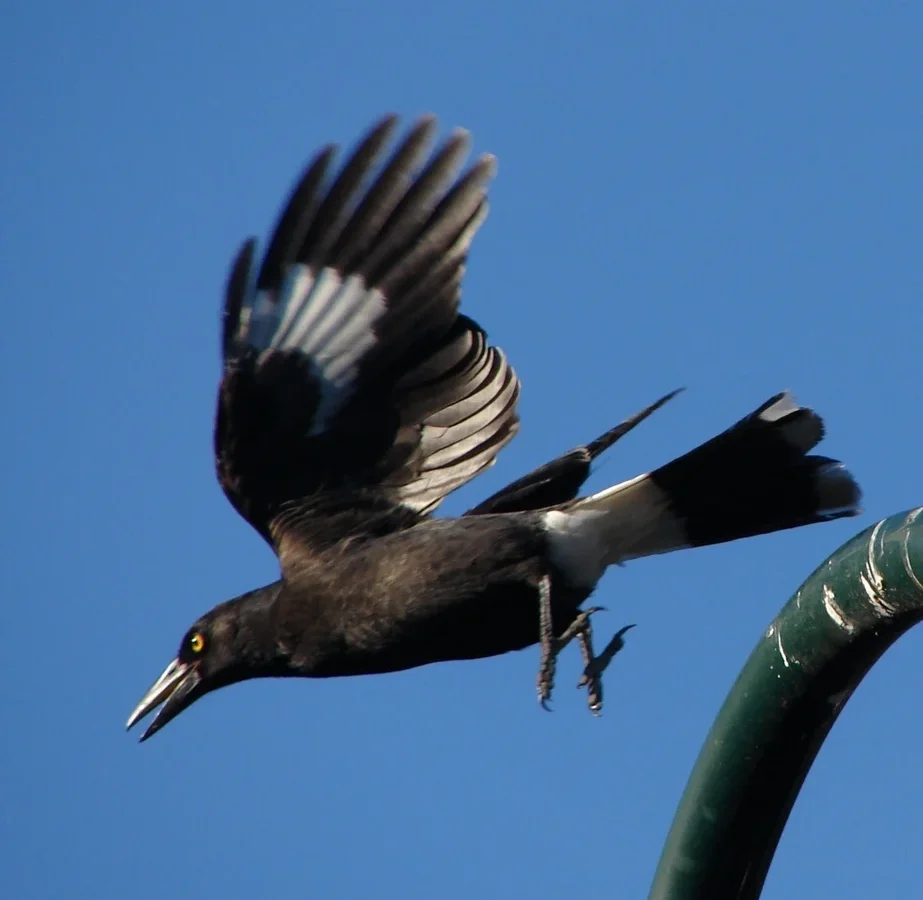
The Pied Currawong (Strepera graculina) is a distinctive Australian bird that can often be identified by a combination of plumage, shape, behaviour and voice. A large mostly black bird with a strong dark bill, bright yellow eyes and conspicuous white under the tail and in the wings, especially visible in flight. Adults are typically about 44–50 cm long, so size can be a useful clue when you compare the bird with nearby species.
How to identify a Pied Currawong
A large mostly black bird with a strong dark bill, bright yellow eyes and conspicuous white under the tail and in the wings, especially visible in flight. When you are trying to identify one in the field, start with overall size and body shape, then check the head pattern, bill, wing markings, tail and any unusually bright colours. Lighting can change how feathers look, so it is safer to use several features together rather than relying on one colour.
Currawongs are intelligent and adaptable. They forage both in trees and on the ground and may form large flocks outside the breeding season. Behaviour is often just as useful as plumage. A bird that repeatedly uses a particular feeding style, posture or flight pattern can be much easier to identify even when it is partly hidden or too far away for a perfect view.
Where does the Pied Currawong live in Australia?
Common in eastern Australia from northern Queensland through New South Wales and Victoria, including many towns and cities.
Typical habitat includes forest, woodland, mountain areas, farmland edges, parks and leafy suburbs. The best places to look are areas that combine suitable food with safe roosting or nesting sites. Distribution can shift locally with rainfall, flowering, breeding seasons and food availability, so a species may be common in one district and much harder to find only a short distance away.
What does the Pied Currawong eat?
Fruit, insects, small vertebrates, carrion and occasionally eggs or nestlings. The exact menu can change with season and location. Wild birds generally do best when they can use natural food sources, so this guide describes normal feeding ecology rather than encouraging people to offer processed human food.
Watching how a bird feeds can also help with identification. Note whether it forages on the ground, probes mud, takes nectar from flowers, hunts from a perch, dives into water or catches insects in flight.
Behaviour and calls
Currawongs are intelligent and adaptable. They forage both in trees and on the ground and may form large flocks outside the breeding season.
The classic call is a far-carrying, ringing 'curra-wong' phrase along with croaks and other varied notes. Learning even one characteristic call can be extremely helpful because many Australian birds are heard before they are seen. Calls can vary with alarm, courtship, contact between flock members and time of day, so use voice together with visual clues.
Nesting and breeding
Pairs build a substantial stick nest high in a tree and defend the immediate nesting area. Breeding timing varies across Australia and can be influenced by latitude, rainfall and local conditions. If you find an active nest or dependent young, observe from a respectful distance so the adults can continue normal feeding and defence behaviour.
Similar birds
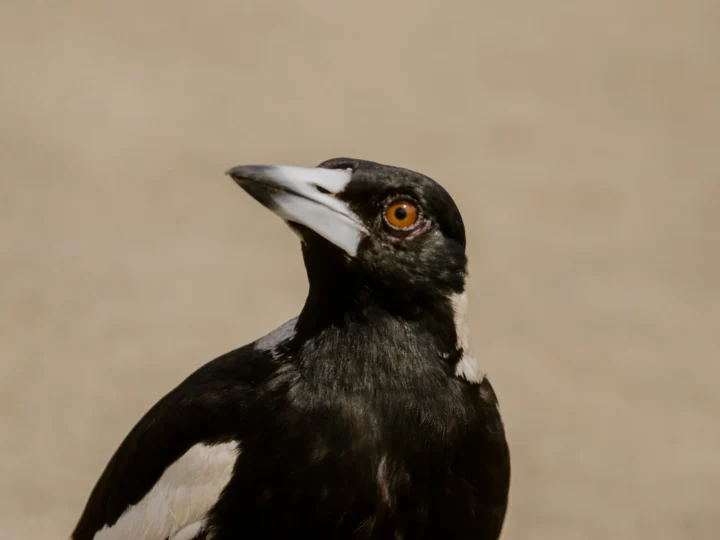
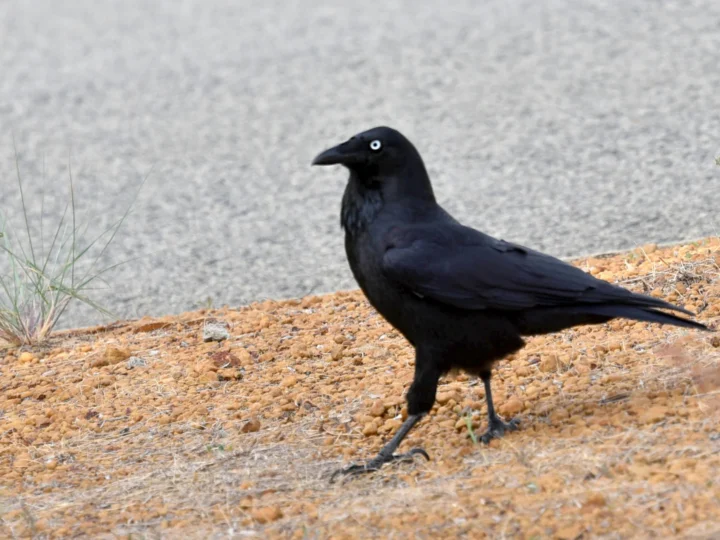
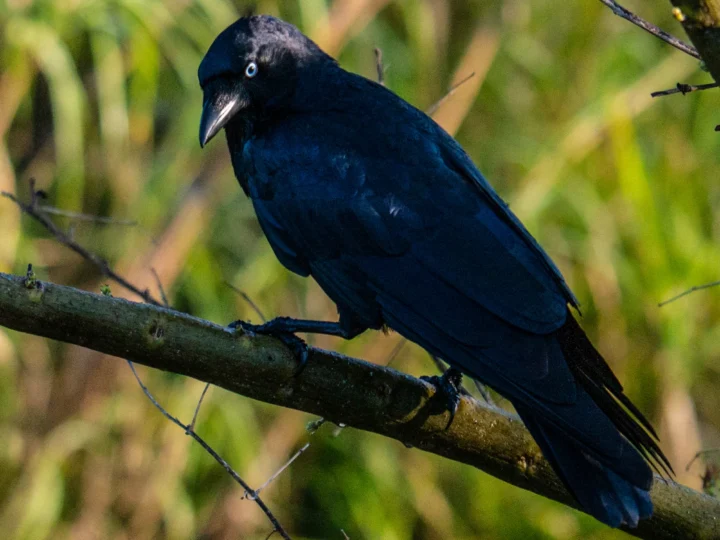
Australian Ravens and Torresian Crows are all-black without the currawong's white tail and wing markings. Australian Magpies have much more white on the back and shoulders. If you are unsure, compare bill shape, body proportions, eye colour, leg colour and voice as well as plumage. Photographs taken from different angles can be especially useful for checking difficult features after the sighting.
Quick identification tip
For a fast identification, remember three things: the bird is approximately 44–50 cm long; its key visual clue is a large mostly black bird with a strong dark bill, bright yellow eyes and conspicuous white under the tail and in the wings, especially visible in flight.; and its usual Australian setting is forest, woodland, mountain areas, farmland edges, parks and leafy suburbs. Those three clues will usually narrow the options quickly before you compare similar species.
Sources and further reading
For additional Australian bird information, see BirdLife Australia bird profiles and the Australian Museum bird collection.
.jpg)