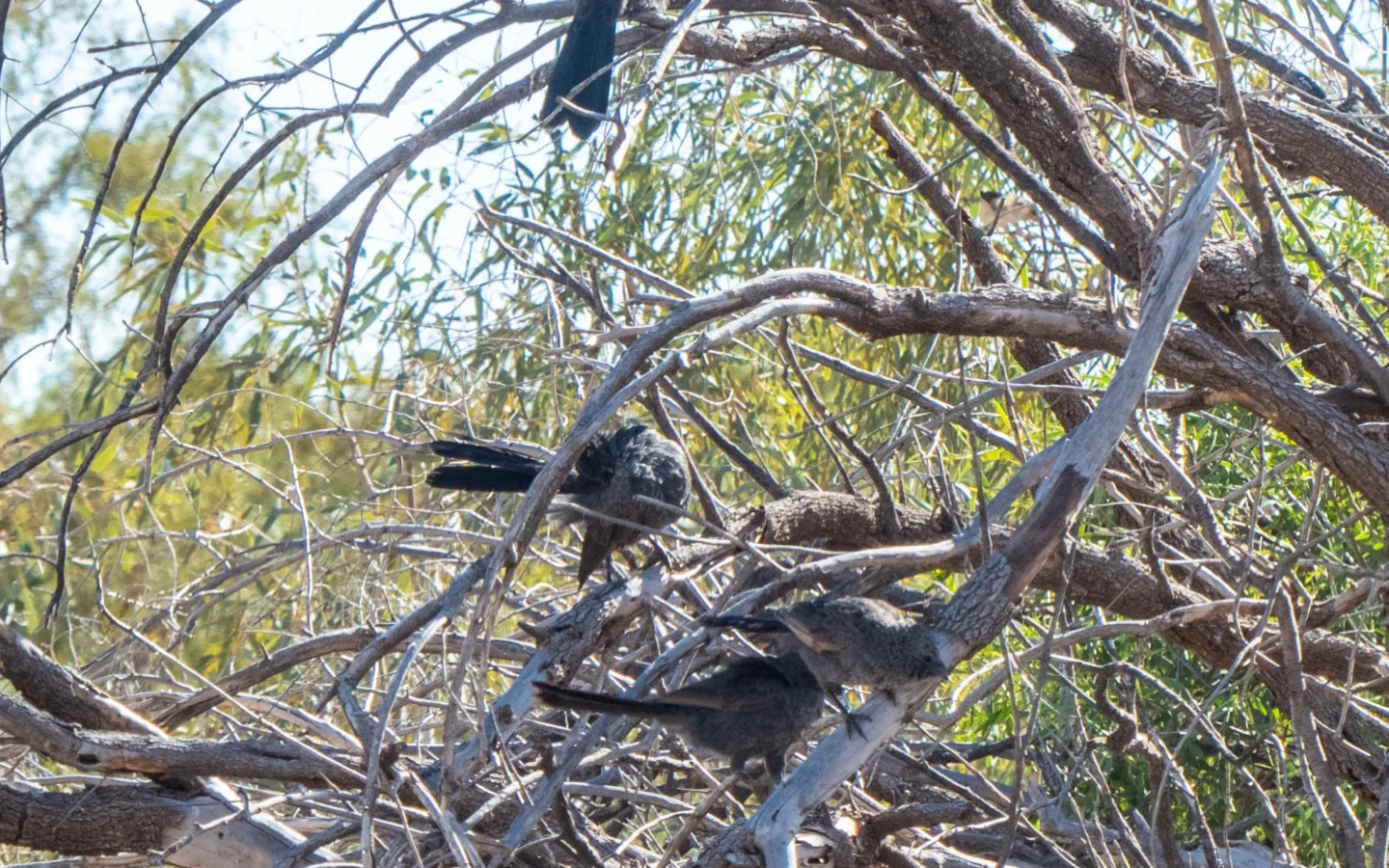
A good identification of the Apostlebird (Struthidea cinerea) should rest on several clues, not one photograph or one patch of colour. A grey-brown social bird with darker wings, a long tail, strong legs and a dark slightly curved bill. With an adult length of about 29–33 cm, body proportions and posture can be just as informative as plumage.
How to identify a Apostlebird
A grey-brown social bird with darker wings, a long tail, strong legs and a dark slightly curved bill. Start with silhouette and proportions, then check the head, bill, wings, tail and underparts. If the bird is distant, note how it holds its body and whether the tail is long, short, fanned, cocked or constantly moving. A quick phone photograph can help later, but a written note of colours, size and behaviour is often just as valuable.
For a confident field identification, try to confirm at least three independent clues: overall shape and size, a plumage or bill feature, and either the bird’s habitat, movement or call. That approach is much safer than relying on a single colour that may look different in poor light.
Where is the Apostlebird found in Australia?
Occurs across much of inland eastern and northern Australia, especially in warmer semi-arid woodland and pastoral country.
Typical habitat includes open woodland, riverine trees, dry forest, farms, roadsides and town edges. The species may be common in one district and scarce in another because vegetation, rainfall, food supply, breeding conditions and seasonal movement all affect where birds are seen. When checking a sighting, range should support the identification rather than replace the visual evidence.
What does the Apostlebird eat?
Insects, seeds and other plant or animal food collected mostly from the ground. Feeding style is a practical identification clue: watch whether the bird searches the ground, probes bark, gleans leaves, takes fruit, dives into water or catches insects in flight. Natural feeding behaviour also tells you which habitats are most likely to produce repeat sightings.
Wild birds generally do best when natural food and habitat are available. BirdGuide describes normal diet and foraging ecology; it does not assume that human feeding is necessary or suitable for every species.
Behaviour and calls
Famously communal, usually travelling in groups that forage, preen, defend territory and breed cooperatively. The traditional name refers to the idea of groups of about twelve, although real flock size varies.
A busy mix of harsh, conversational and contact calls that make a flock sound constantly active. Voice is especially useful when a bird is hidden by foliage, active at dawn or dusk, or moving too quickly for a long view. Try to note rhythm, pitch and whether the phrase rises, falls or repeats rather than relying only on a written imitation of the sound.
Nesting and breeding
Group members cooperate to build a sturdy mud-bowl nest and can help feed and defend the young. Breeding timing varies around Australia with latitude, rainfall and local food conditions. If you find an active nest, roost or dependent young, observe from a respectful distance and avoid repeatedly approaching for photographs.
Birds that can look similar
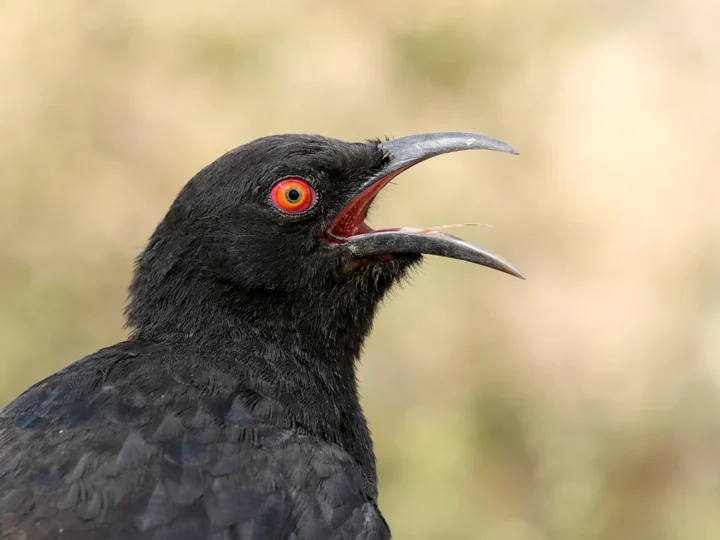
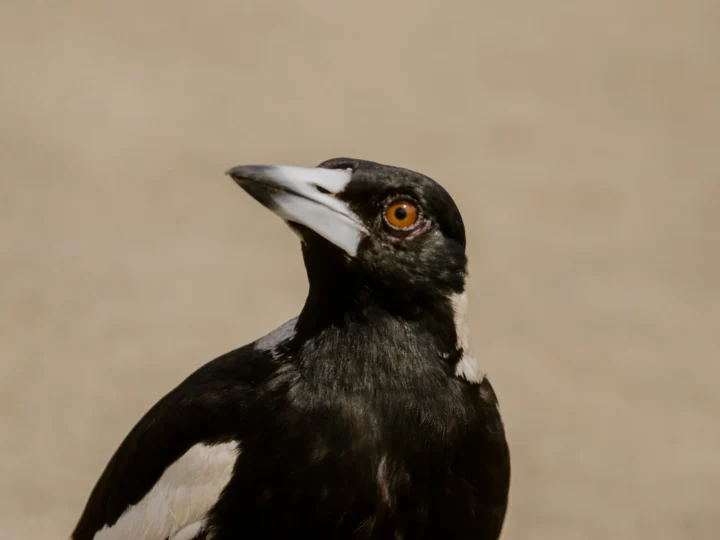
Useful comparison species include White-winged Chough and Australian Magpie. Compare bill shape, eye and face pattern, tail shape, body proportions, voice and geographic range. For difficult groups, a side-on photograph plus a second view of the wings or tail can resolve features that are easy to miss in the field.
Quick identification checklist
- Size: about 29–33 cm
- Key appearance: A grey-brown social bird with darker wings, a long tail, strong legs and a dark slightly curved bill.
- Where to look: Open woodland, riverine trees, dry forest, farms, roadsides and town edges.
- Food: Insects, seeds and other plant or animal food collected mostly from the ground.
- Behaviour: Famously communal, usually travelling in groups that forage, preen, defend territory and breed cooperatively. The traditional name refers to the idea of groups of about twelve, although real flock size varies.
If those clues agree, the identification is much stronger than a colour-only match. If one major feature conflicts, keep the sighting open and compare the related species before deciding.
Sources and further reading
Species information can be cross-checked with BirdLife Australia bird profiles and the Australian Museum bird collection. Taxonomy and common names can change over time, so BirdGuide uses current Australian usage where practical.