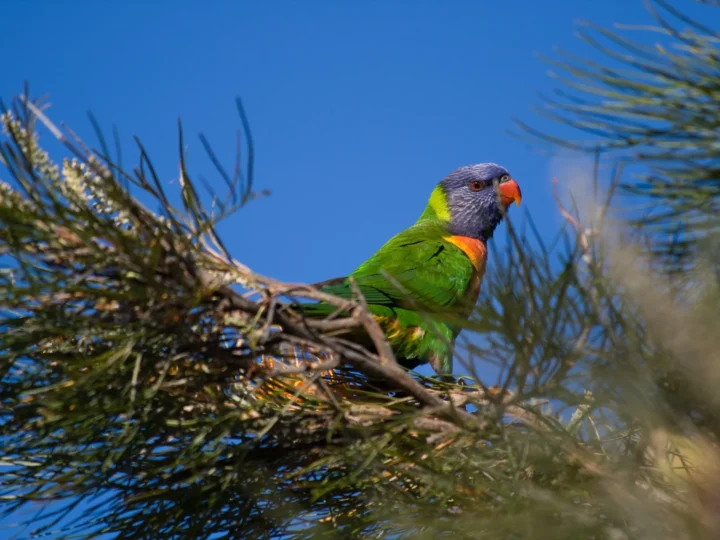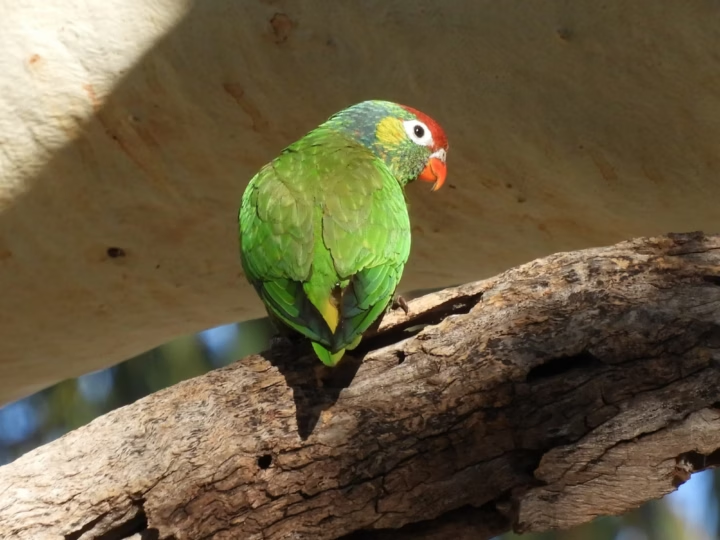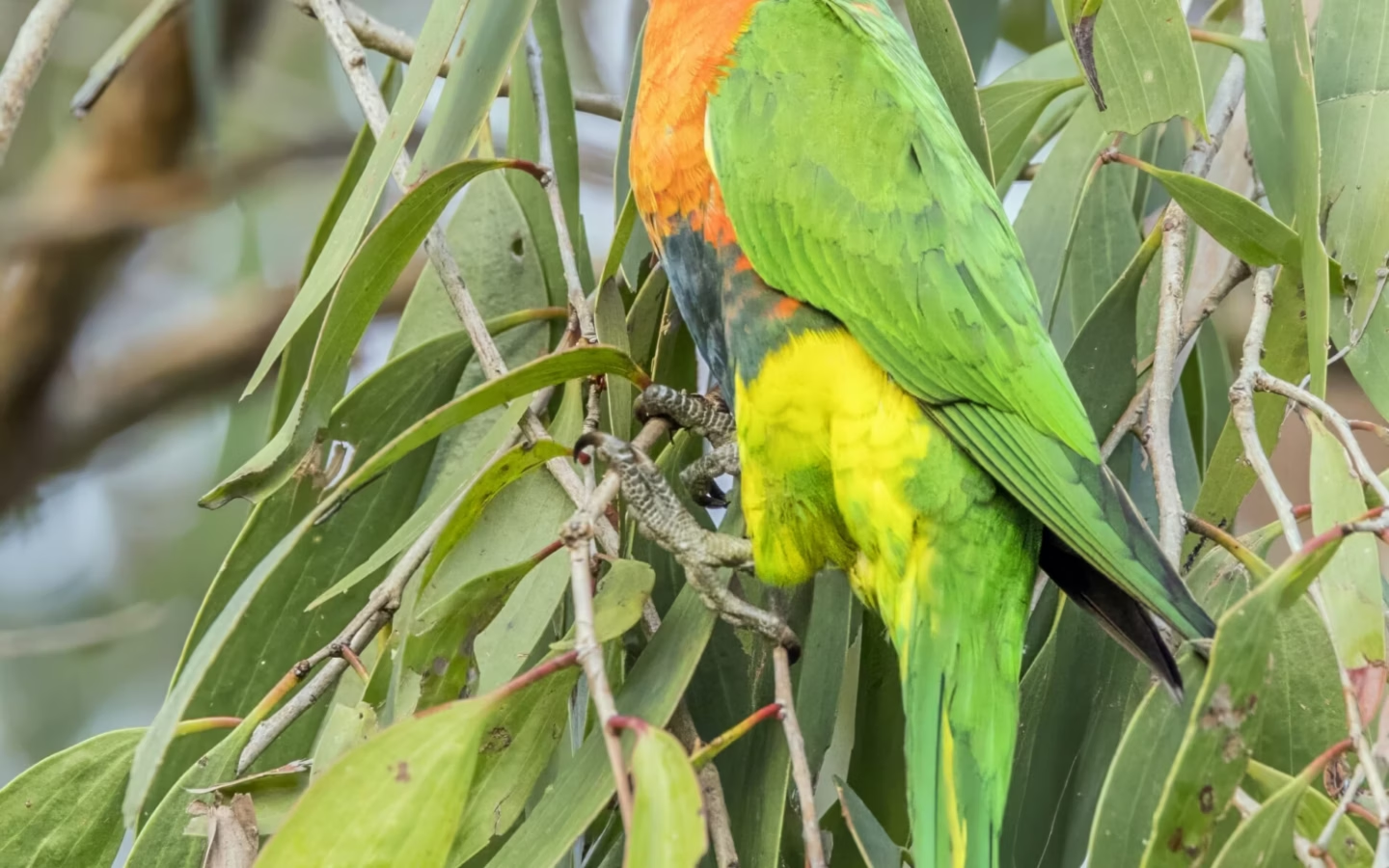
The Red-collared Lorikeet (Trichoglossus rubritorquis) is an Australian bird best identified by combining plumage, body shape, habitat and range. A colourful lorikeet similar to a Rainbow Lorikeet but with a strong red-orange collar and nape, especially conspicuous around the neck. Adults are typically about 26–30 cm long. Size is useful, but it should never be used by itself: distance, posture and perspective can make a bird look larger or smaller than it really is.
How to identify the Red-collared Lorikeet
A colourful lorikeet similar to a Rainbow Lorikeet but with a strong red-orange collar and nape, especially conspicuous around the neck. Start with the overall silhouette and then check the head, bill, wings, underparts and tail. Look for several features that agree with one another rather than relying on a single colour. Sunlight can make bright plumage look washed out, while shade can hide subtle markings. If possible, note the bird’s behaviour and take photographs from more than one angle.
Where does the Red-collared Lorikeet live in Australia?
Northern Australia, particularly the Top End and Kimberley.
Typical habitat includes tropical woodland, mangroves, parks, gardens and other areas with flowering trees. Location is an important part of identification because many Australian birds have strongly regional distributions. Within the broad range, local abundance can change with season, rainfall, flowering, fire history and food availability. A species may therefore be common in one district but scarce only a short distance away.
What does the Red-collared Lorikeet eat?
Nectar and pollen, plus fruit and some insects. Food availability influences where birds occur and how visible they are. When trying to identify a bird, watch exactly how it feeds: note whether it picks food from the ground, probes flowers, searches bark, chases insects in the air or works methodically through foliage. Feeding behaviour often provides an extra clue when plumage is difficult to see.
Behaviour and calls
Lorikeets are active, fast-flying and highly mobile. They often move in noisy groups between flowering trees, where they clamber through the canopy and use a brush-tipped tongue to gather nectar and pollen. Sharp screeches and chattering contact calls are useful clues when the birds are hidden among blossoms. Flocks may travel considerable distances as flowering conditions change.
Nesting and breeding
Pairs usually breed in natural hollows in mature trees. Suitable cavities are a limited resource, so large old trees are valuable even in parks and suburbs. The female generally incubates the eggs while both adults contribute to feeding the young. Breeding timing can change across the species’ range and with local flowering and rainfall.
If you find an active nest, hollow or dependent young, keep enough distance for the adults to continue normal behaviour. Repeated approaches can interrupt feeding or draw attention to the nest. Breeding timing is not identical across Australia, so local conditions are more useful than assuming one fixed month applies everywhere.
Similar birds
Useful comparison species include Rainbow Lorikeet and Varied Lorikeet. When separating similar birds, compare several points together: size, bill shape, head pattern, wing and tail markings, voice, habitat and geographic range. For this species, the best starting clue is: a colourful lorikeet similar to a Rainbow Lorikeet but with a strong red-orange collar and nape, especially conspicuous around the neck. If one major feature does not fit, keep the identification open until you can check another view or call.
Best way to confirm your identification
Use a simple three-step check. First, confirm that the bird is roughly 26–30 cm long. Second, match the visible features with this description: a colourful lorikeet similar to a Rainbow Lorikeet but with a strong red-orange collar and nape, especially conspicuous around the neck. Third, ask whether the location and habitat make sense: the species occurs in northern Australia, particularly the Top End and Kimberley. and commonly uses tropical woodland, mangroves, parks, gardens and other areas with flowering trees. Matching appearance, place and behaviour is much more reliable than matching colour alone.
Quick identification tip
If you remember only one thing, look for a colourful lorikeet similar to a Rainbow Lorikeet but with a strong red-orange collar and nape, especially conspicuous around the neck. Then confirm the sighting with size, habitat and range. That combination gives you a stronger identification than any single photograph or colour patch viewed in isolation.
Sources and further reading
For additional Australian bird information and current species guidance, see BirdLife Australia bird profiles and the Australian Museum bird collection.